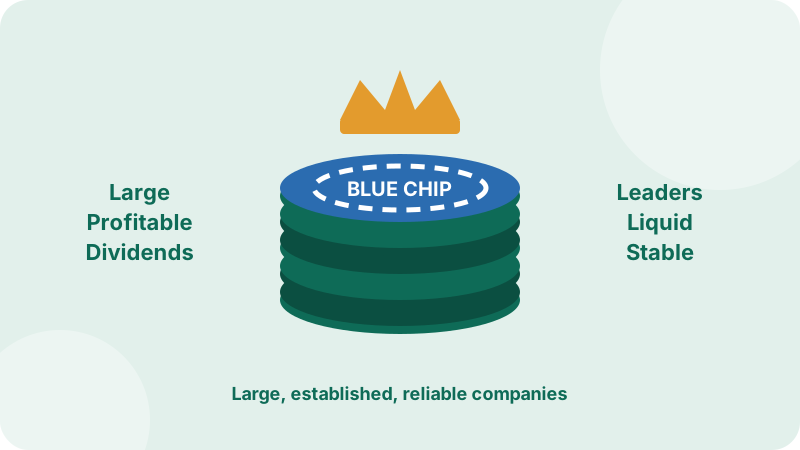
You'll often hear "blue chip stocks" described as safe, solid investments. The name comes from poker, where blue chips traditionally had the highest value. In the stock market, it means shares of large, reputable companies with a long history of performing well through good times and bad.
A simple way to understand it
In your city, there's probably a famous sweet shop that has been running for 50 years. Everyone knows it, it's busy on every Eid, and it has survived many tough years. A new shop that opened last year might grow faster, or might close. The old, trusted shop is like a blue chip.
Common features of blue chip companies
- Large size: among the biggest companies on the exchange by market value.
- Long track record: profitable for many years, including during economic downturns.
- Market leaders: strong brands or a leading position in their industry.
- Regular dividends: many pay dividends year after year.
- Strong finances: manageable debt and healthy cash flow.
- High liquidity: their shares trade every day in large amounts, so buying and selling is easy.
Blue chip vs small-cap: an example
| Blue chip (fictional "Indus Energy") | Small company (fictional "Nova Startups") | |
|---|---|---|
| Years of profit | 25+ years | 3 years |
| Dividend | Every year | None yet |
| Typical yearly price swings | Moderate | Large |
| Growth potential | Steady | Could be high, or could fail |
Advantages
- More stability than smaller companies, especially for beginners.
- Dividend income that can be reinvested.
- Information is easy to find: widely covered by analysts and news.
- Easy to sell when you need money.
Things to keep in mind
- Not risk-free: blue chips can fall sharply in market crashes, or when their industry faces trouble (for example, government policy changes, energy prices or interest rates).
- Slower growth: big companies usually grow more slowly than successful small ones.
- Price still matters: a great company bought at a very high P/E can still be a poor investment.
- Status can change: yesterday's blue chip can lose its position if it fails to adapt.
How to find blue chips on the PSX
There's no official "blue chip list". A practical starting point is the KSE-30 index, which tracks 30 of the largest and most actively traded companies on the PSX. Then check each company's:
- Profit history over 5–10 years
- Dividend record
- Debt levels
- Position in its industry
Our guide on reading a financial report shows you how.