On 30 October 2026, the State Bank of Pakistan (SBP) released draft Open Banking Regulations and asked banks, fintech companies, technology firms, consumer groups, academics and the general public for feedback. It may sound like a technical banking matter, but if the rules go ahead, they could change how millions of Pakistanis apply for loans, pay bills and manage their money from their phones.
What is open banking, in simple words?
Right now, the information about your bank account (your balance, salary credits and spending) lives inside your bank. Only your bank's own app and branch can use it. If you want a loan from another lender, you usually print statements, get them stamped and hand them over.
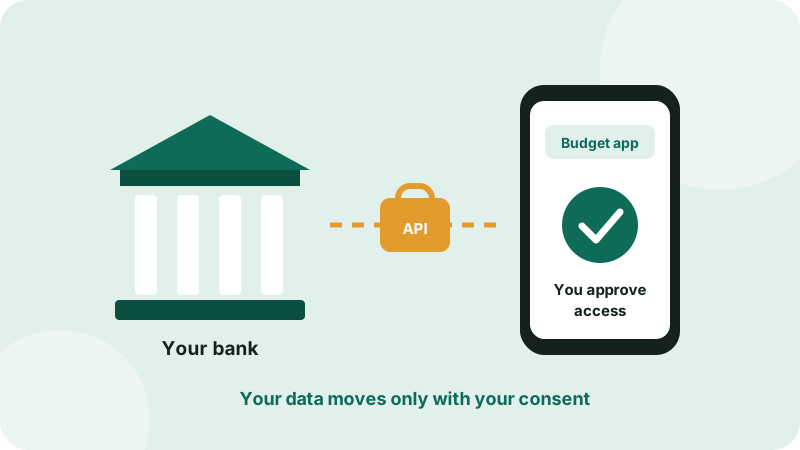
Open banking changes this. It lets you choose to give a licensed third-party app secure, limited access to your bank data, or permission to make a payment from your account. The connection happens through a secure digital link called an API, so you never hand over your password. The key principle is consent: nothing is shared unless you approve it, and you can withdraw that permission.
A simple comparison: today your bank is a locked house and only the bank has the key. Open banking gives you the ability to hand a specific, time-limited guest pass to someone you trust, for one room only.
What could it look like in daily life?
Faster small-business loans: Kamran runs a mobile phone shop in Multan. A digital lender asks to see six months of his account history. Instead of visiting the bank for stamped statements, he taps "approve" in the lender's app. The lender sees his sales deposits within seconds and can make a decision the same day.
One view of all your money: Sana has a salary account in one bank and savings in another. A budgeting app, with her permission, shows both balances and sorts her spending into groceries, fuel and bills, helping her see where her money goes each month.
Easier payments: An online shop could take payment straight from your bank account after you approve it, without a card. Combined with the SBP's Raast instant payment system, this could make paying merchants cheaper for both sides.
What the SBP's draft covers
- Purpose: to encourage innovation, increase competition and widen access to efficient, customer-focused digital financial services.
- Payments: support for digitising business-to-business and consumer-to-business payments.
- Safeguards: requirements on data protection, privacy, cybersecurity, fraud prevention and consumer protection.
- Built on testing: the SBP says the draft follows international practice and uses lessons from the first group of firms in its open banking regulatory sandbox, a controlled testing programme for new financial products.
Open banking is not entirely new in Pakistan. Some banks and fintechs have already launched early platforms, such as BankIslami's digital arm aik, which introduced a Shariah-compliant open banking platform this year. The regulations would give the whole market one set of rules.
Why it matters
- Credit for the underserved. Many small traders, freelancers and women entrepreneurs are creditworthy but lack formal paperwork. Their bank transaction history could become their credit record.
- More competition. When customers can easily share data with new providers, banks have to offer better rates and services to keep them.
- Less paperwork. Fewer branch visits, printouts and stamps.
The risks, and how to stay safe
Any system that shares financial data carries risks: data misuse, weak security at a small app, and scams that copy legitimate services. The final rules will matter a lot here. As a customer, a few habits will protect you:
- Only use apps regulated by the SBP or SECP. Check the regulator's list before connecting your account.
- Read what you are approving. Does the app want to see your balance or move your money? For how long?
- Grant the minimum. If an app only needs three months of history, do not give it a year.
- Review and revoke. Check your bank app regularly for connected services and remove ones you no longer use.
- Never share OTPs or passwords. Genuine open banking never asks for your bank login or one-time codes. Anyone who does is a scammer.
How to share your views with the SBP
The consultation is open to everyone until 30 November 2026. The draft is available on the SBP website. Comments can be emailed to the SBP's Payment Systems Policy & Oversight Department at psdpolicy@sbp.org.pk with the subject line "Feedback on Draft Open Banking Regulations", or posted to the department at the SBP Building, I.I. Chundrigar Road, Karachi.
The bottom line
Open banking puts you in control of your own financial data and lets you use it to get better services. If the final rules strike the right balance between innovation and safety, it could make loans faster, payments cheaper and money management simpler for ordinary Pakistanis. Until then, the best preparation is to understand how consent works and to stay alert to scams that will try to exploit the new buzzword.