On 2 November 2026 the Pakistan Bureau of Statistics (PBS) reported that consumer prices in October were 9.6% higher than in October 2025. The headline sounds like good news: inflation was 10.3% in September and peaked above 11.5% in May. Yet if you buy groceries, fill a tank or pay an electricity bill, life does not feel any cheaper. This explainer shows why both things are true, and what you can do about it.
What the 9.6% figure actually measures
PBS tracks the prices of a large "basket" of goods and services that a typical household buys: food, rent, fuel, electricity, clothing, school fees, medicine and so on. The inflation rate compares the cost of that basket today with its cost twelve months ago.
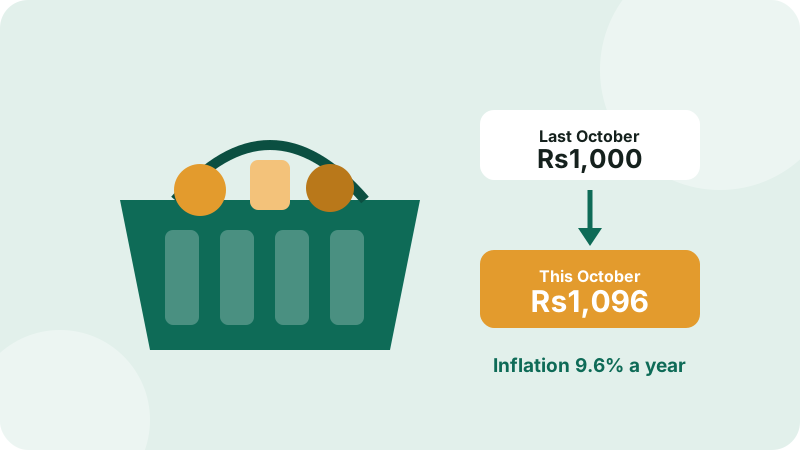
Example: If the basket cost Rs1,000 in October 2025, it costs about Rs1,096 in October 2026. That Rs96 difference is 9.6% inflation.
The October numbers in more detail:
| Measure | October 2026 | What it tells you |
|---|---|---|
| Headline CPI (year-on-year) | 9.6% | Overall rise in living costs over 12 months |
| Change from September | +1.1% | Prices still rose during the month |
| Urban / rural | 9.5% / 9.8% | Villages felt slightly more pressure |
| Core inflation | 7.8% | Underlying trend without volatile food and energy |
| Wholesale prices (WPI) | 13.8% | Costs businesses pay, which often reach shoppers later |
| July-October average | about 10% | Compared with under 5% in the same months last year |
"Falling inflation" does not mean falling prices
This is the most common confusion. Inflation is the speed at which prices rise, not the level of prices. When inflation drops from 10.3% to 9.6%, prices are still climbing; they are just climbing a little more slowly. Prices only fall if inflation turns negative, which is rare.
A simple way to picture it: a car slowing from 103 km/h to 96 km/h is still moving forward. Your grocery bill is the distance travelled, and it keeps growing.
How Pakistan got here in 2026
At the start of the year inflation was under 6%, comfortably inside the SBP's 5-7% target. Then the war involving the US, Israel and Iran broke out in late February, and global oil prices jumped from around $70 to well above $100 a barrel. Pakistan imports most of its fuel, so the government had to raise petrol and diesel prices sharply in March. Fuel affects almost everything: transport fares, the cost of moving vegetables to markets, factory costs and electricity.
Inflation climbed through the spring, peaking at around 11.7% in May, and has been easing slowly since: about 11.1% in June and August, 10.3% in September and now 9.6%. Part of the easing comes from the SBP's rate increases and steadier food prices. Part of it is a "base effect": prices jumped in the spring, so the comparison gets easier as the months pass.
Two warning signs in the data
- Wholesale prices are up 13.8%. These are the prices traders and manufacturers pay. When they rise faster than shop prices, businesses often pass the extra cost to customers a few months later.
- Oil is still unstable. Pakistan now changes fuel prices daily. Diesel rose to about Rs403 a litre at the end of October, and every sharp move in global oil can reverse the recent progress.
On the positive side, core inflation fell to 7.8% from 8.6%, which suggests the underlying trend is cooling.
What inflation does to your savings
Inflation is a silent tax on money that does not grow. If you keep Rs100,000 at home for a year while prices rise 9.6%, it will buy only what about Rs91,200 buys today. The note in your drawer has not changed, but its power has.
What matters is your real return: what you earn minus inflation.
| Where Rs100,000 sits | Yearly return (before tax) | Rough real return |
|---|---|---|
| Cash at home or a current account | 0% | -9.6% |
| Bank savings account (around the minimum rate) | about 10.5% | about +0.9% |
| National Savings Special Savings Certificate | 12% | about +2.4% |
| Behbood / Pensioners' Benefit Account | 12.96% | about +3.4% |
These are illustrations using published rates in late October 2026. Tax reduces every return, and rates change often, so check the latest figures before deciding. Eligibility rules also apply to some schemes, such as Behbood certificates for senior citizens and widows.
Practical steps
- Do not leave large sums idle. Move spare money from a current account into a savings account or term deposit.
- Compare rates every few months. Banks and National Savings revise rates after SBP decisions.
- Become a tax filer. Non-filers pay much higher withholding tax on profit, which can wipe out the real return.
- Think long term for growth. Over many years, well-run companies can raise prices with inflation, which is why some savers put part of their money in shares or equity funds. This carries risk, so read investing vs trading and why not to invest everything at once first.
- Budget for higher bills. Fuel and electricity adjustments are still coming through, so build a small cushion into your monthly plan.
The bottom line
Inflation at 9.6% is better than 11.7%, but it is still high. Prices will keep rising, just more slowly, as long as inflation is positive. The goal for any saver is simple: make sure your money earns more than inflation after tax. The SBP's own aim is to bring inflation back to 5-7%, and its recent rate hike to 12% is part of that effort.